
fig. a: The Winter of 2026
It’s been a winter, there’s no doubt about that. And for me, it’s been a winter devoted to rye bread. I’ve gotten some nice rye flour on a couple of occasions over the last few months, most recently from Howick Community Farms, and I’ve just been in the mood.
My go-to rye bread is a “Danish rye” recipe I developed a few years ago. About two years ago, I updated it. Now I call it my “New Danish Rye.”
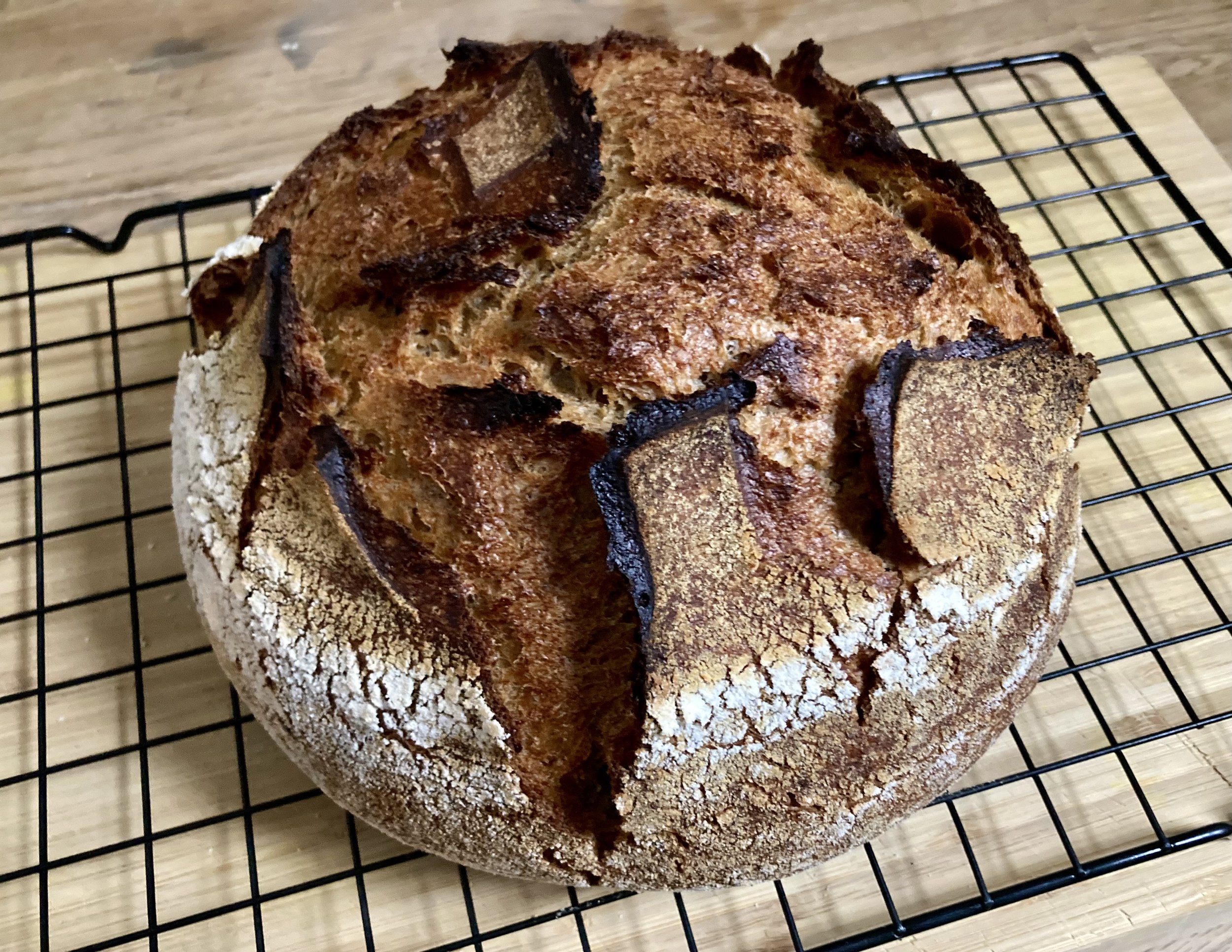
fig. b: “New Danish rye”
New Danish Rye
50% all-purpose flour
40% rye flour
10% whole wheat
75% water
10% molasses
15% leaven
2.5% salt
2% caraway seeds, toasted
More recently, I developed a Dark Rye recipe. It’s similar to a pumpernickel, but uses standard rye flour. I love it. It’s got such a robust flavour.
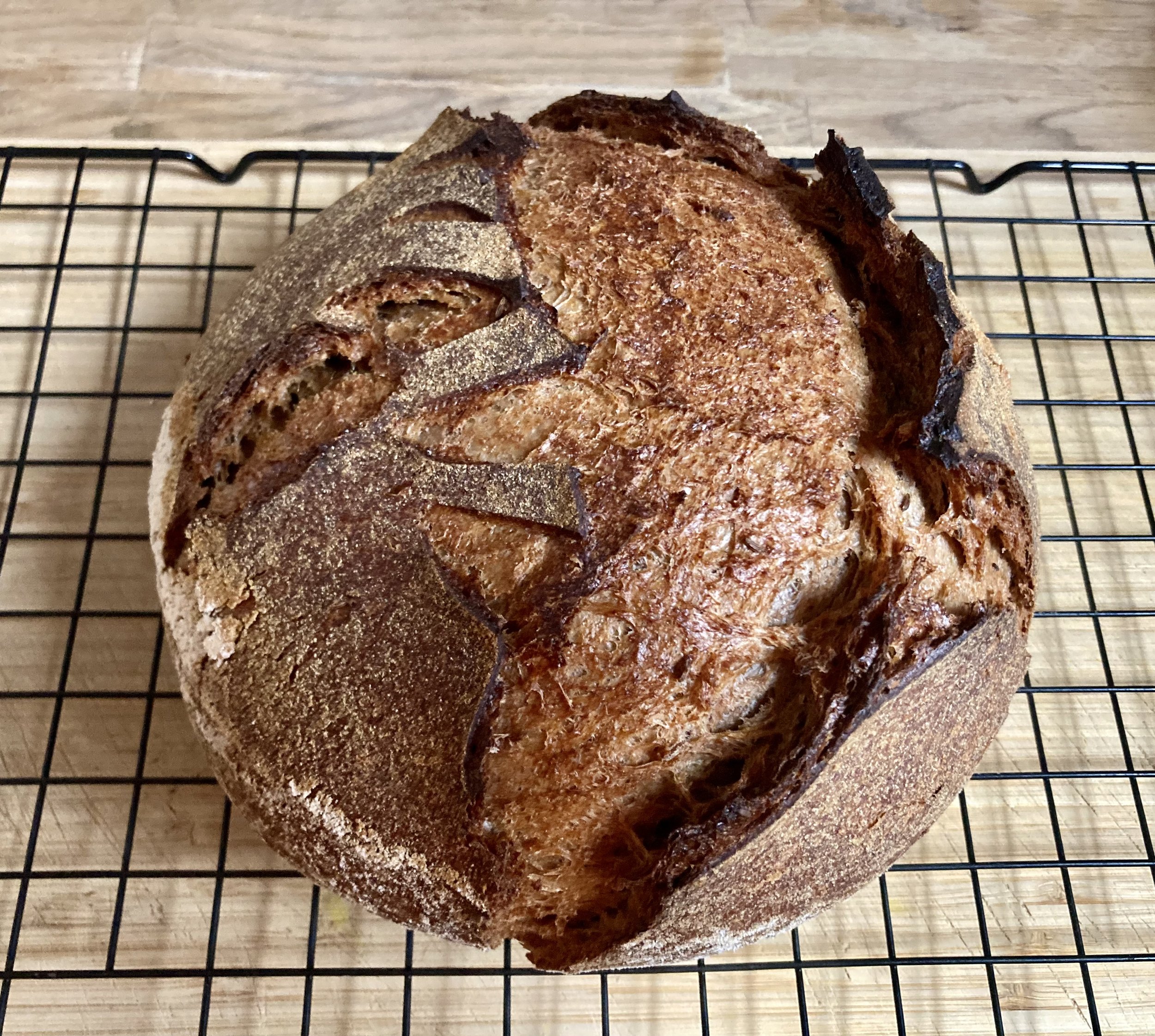
fig. c: Dark Rye
Looks very similar to the Danish Rye, I know, but it’s considerably darker on the inside.
Dark Rye
50% all-purpose flour
40% rye flour
10% whole wheat
65% water
10% brewed coffee
10% molasses
15% leaven
2.5% salt
2% caraway seeds, toasted
2% cocoa
A few years ago, I got my hands on some gorgeous Italian rye flour from Anson Mills in South Carolina: a heirloom rye they call Abruzzi. That inspired me to develop an “Italian Rye”—my fantasy of what a rye bread in Italy might taste like. Honey gave it a touch of sweetness. Instead of the caraway seeds that I tended to use in other loaves, here I used anise seeds. The result was light and delicate, fantastic with Italian cheeses and with Italian charcuterie.
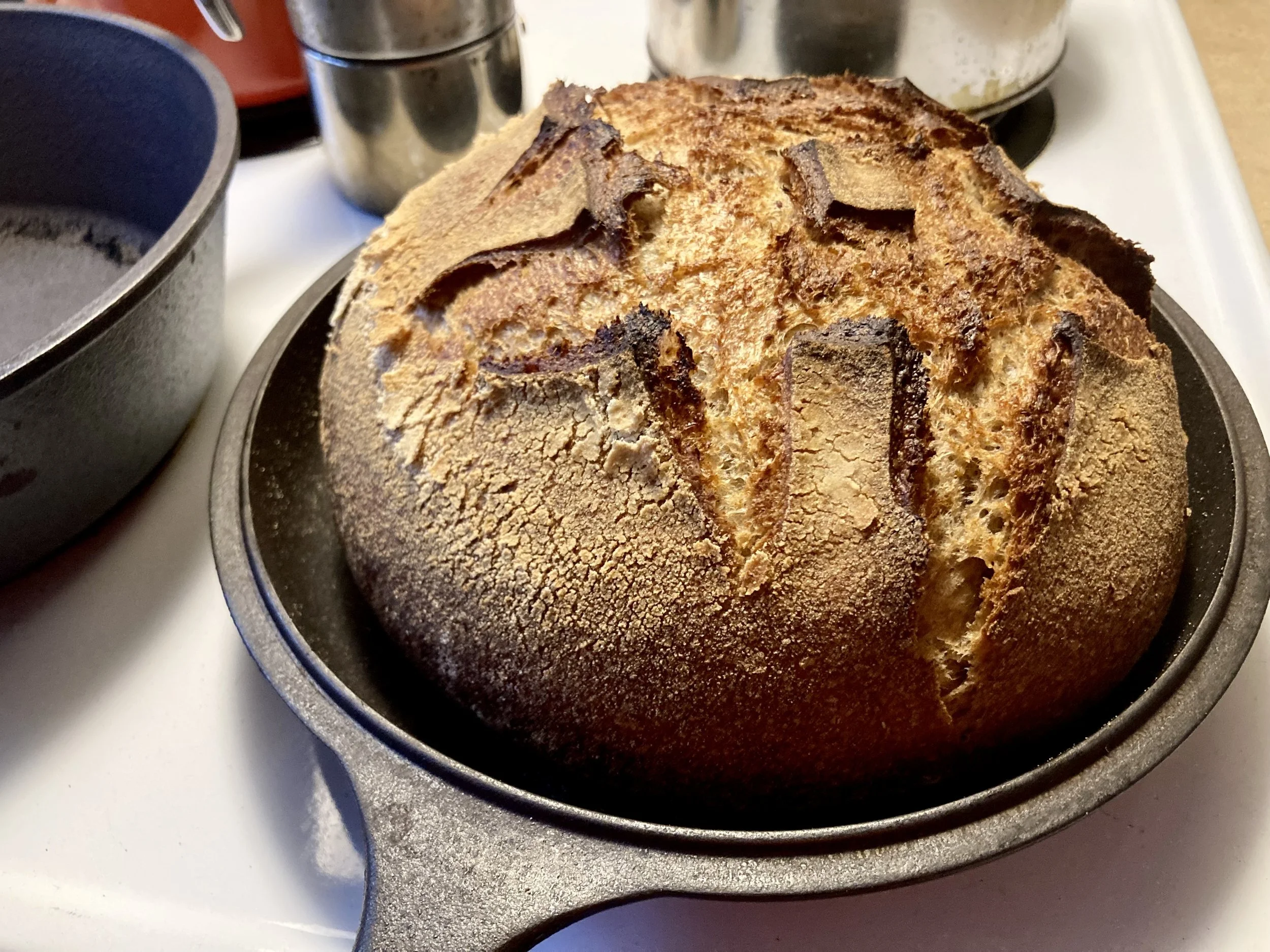
fig. d: “Italian Rye”
“Italian Rye”
50% all-purpose flour
40% rye flour
10% whole wheat
75% water
10% honey
15% leaven
2.5% salt
1.5% anise seeds, toasted
This “Italian Rye” was a huge hit at a late-winter potluck I attended recently. Even people who claimed to not like the flavour of anise seeds were impressed and went back for seconds. That loaf didn’t last long. People devoured it.
Thus concludes this episode of Adventures in Home Bread Baking.
ak