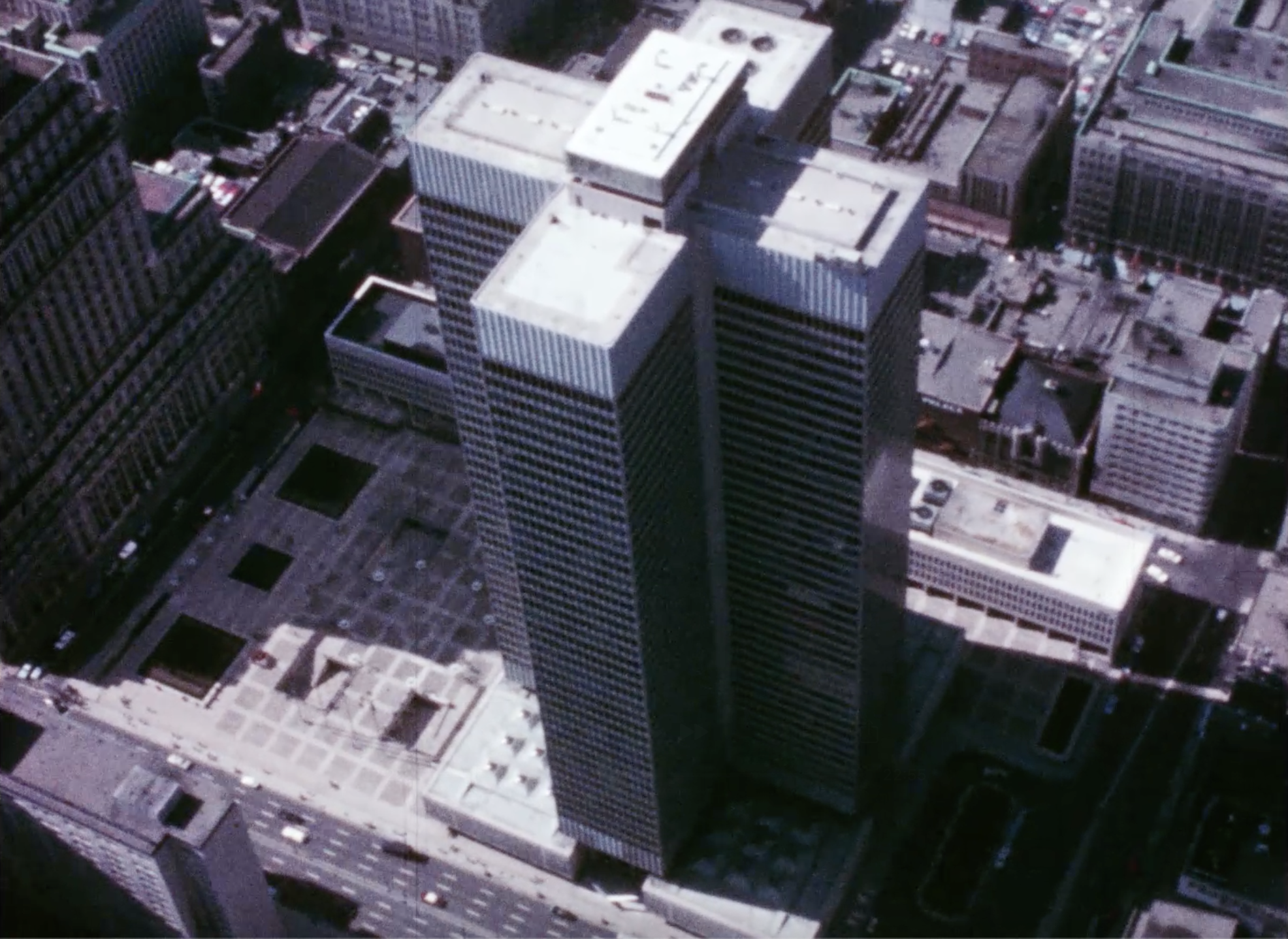
fig. a: Place Ville Marie, as seen in Crawley Films’s Expo 67 (1965)
A special issue of the Canadian Journal of Film and Media Studies dedicated to Crawley Films is out now. If you're not familiar with this production company, Crawley Films of Ottawa was a Canadian powerhouse of sponsored, educational, and industrial films, but they also produced theatrical feature films, animated films, documentaries, and commercials. The unit was founded by the husband and wife team of Frank Radford "Budge" Crawley and Judith Crawley in 1939, just as the National Film Board of Canada (NFB) was getting underway, and Crawley Films produced numerous films for the NFB, especially in its early years. Strangely, relatively little has been written about Crawley Films until now. Many of us who worked on this issue were knowledgeable (in come cases, very knowledgeable) when it came to Crawley Films, and yet our overwhelming experience was that there was so much more to the story than we had imagined. Indeed, as Liz Czach and Charles Acland write in their introduction, "The company was so prominent, so central to Canadian film and then television, that it is a bit like finding out that there was another film board thriving alongside the world-famous NFB, but that for some reason historical attention largely accrued to one and not the other."
I contributed an article on Crawley Films's involvement with Expo 67 in the early- to mid-1960s. I'm attaching a few stills from my research.

fig. : Pierre Dupuy, as seen in Crawley Films’s Expo 67 (1965)

fig. c: The Klondike Gold Rush, as seen in Crawley Films’s Expo 67 (1965)
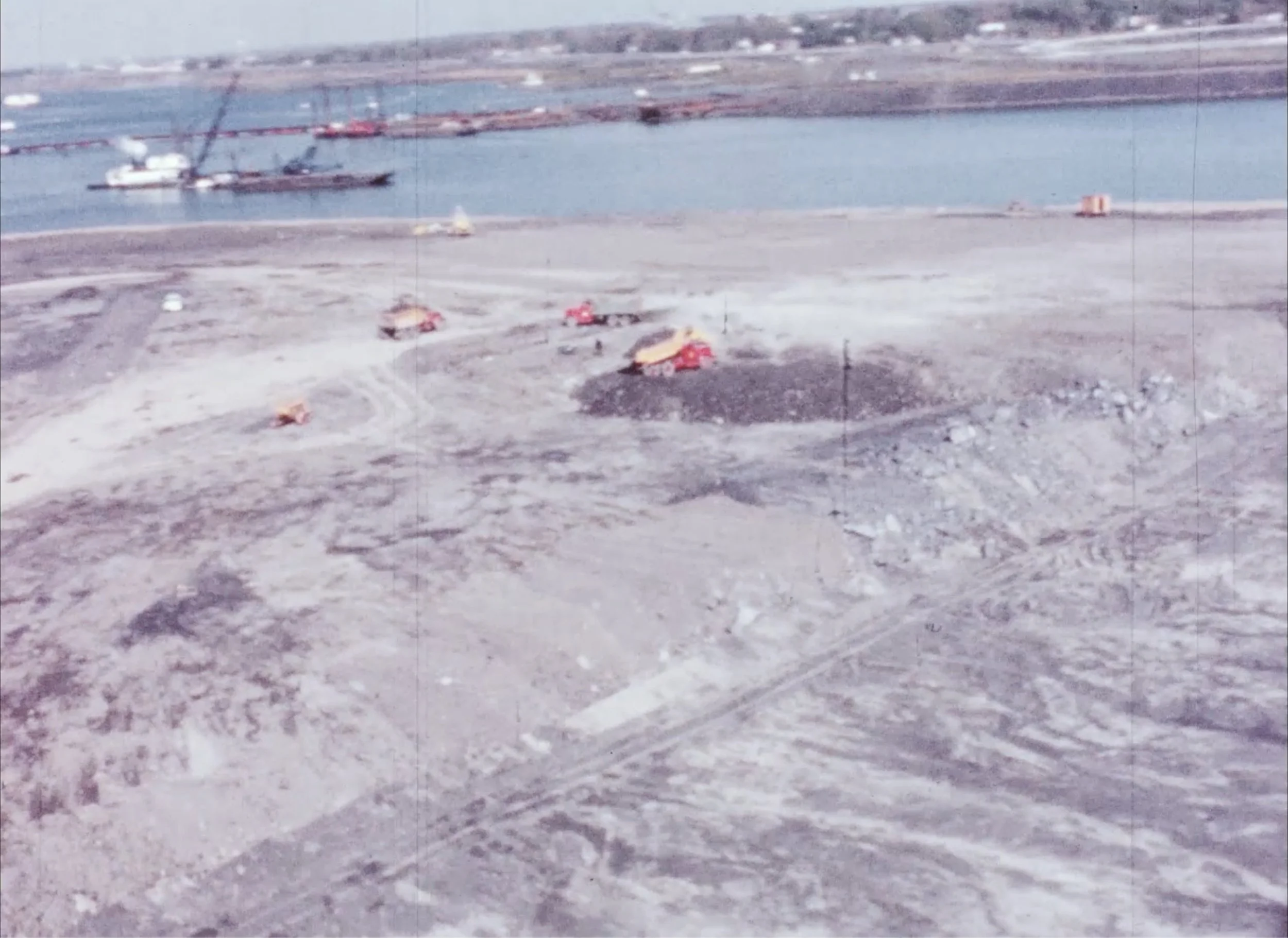
fig. d: The construction of the Expo 67 grounds, as seen in Crawley Films’s Expo 67 (1965)
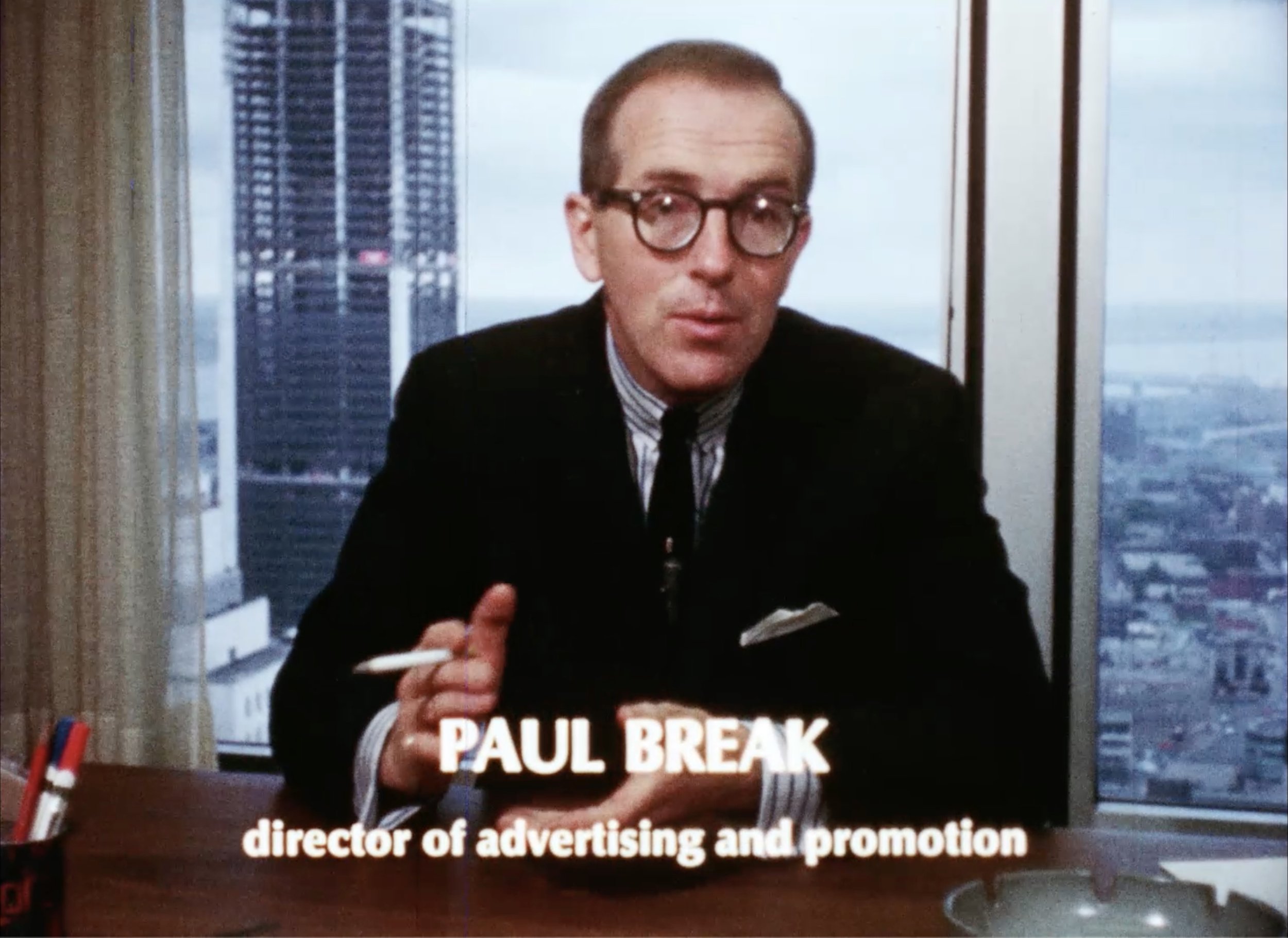
fig. e: Paul D. Break, as seen in Crawley Films’s Expo 67 (1965)

fig. f: The redevelopment of downtown Montreal, as seen in Crawley Films’s Expo 67 (1965)

fig. g: Moshe Safdie, “architect of Habitat,” as seen in Crawley Films’s Expo 67 (1965)

fig. h: A passerby gives his thoughts on the Expo 67 project in Crawley Films’s Expo 67 (1965)
fig. i: Final credits, Crawley Films’s Expo 67 (1965)
Lots of talented people were involved in this project, including Liz Czach and Charles Acland, our editors, Dominique Bregent-Heald, Louis Pelletier, Paul Moore, Christie Milliken, Rachel Webb, and Laura Pannekoek.
If Canadian film and media studies is your bag, or you're just curious, you can find this issue of CJFMS here: https://utppublishing.com/toc/cjfms/34/2
If you’re specifically interested in Crawley Films and Expo 67, you can find my essay here.
Thanks to Liz and Charles for organizing this issue. Hats off to Liz, in particular, for her amazing tenure as Editor of the CJFMS! And welcome to Jennifer VanderBurgh and Mike Zryd, the new Editors.


